

We must finally release the handbrake!


Interview with Prof. Dr Adrian Wildenauer, Professor of Digital Construction and Head of MAS Real Estate
Despite the availability of numerous tools, the construction industry is making little progress in terms of digitalisation—processes are stumbling, standards are lacking, and systems are incompatible. Prof. Dr Adrian Wildenauer explains why true digitalisation can only succeed with clear rules, cooperation, and the digital product passport. He also discusses why change begins primarily with people.
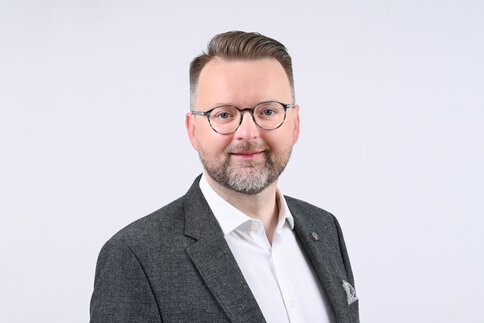
Mr. Wildenauer, you have been working on digital construction for many years. Why is digitalization so crucial?
Prof. Dr. Adrian Wildenauer: I believe that if the construction industry were truly digital, my professorship wouldn’t even be necessary. For me, digitalization mainly means that processes actually work. Nice models and new software licenses are secondary. Many clients buy software without knowing what it’s for. The result is that we have more screens, but the processes still haven’t improved. My role is to close this gap—to use digital methods in a way that genuinely simplifies everyday work.
Where are the biggest problems today?
Prof. Dr. Adrian Wildenauer: The industry blocks itself. We all know that digital methods could help us, but we lack the courage to take the step. Instead of creating shared rules, everyone builds their own system. The result: nothing fits together. That causes incompatibility and frustration.
Do you have an example of how it could work better?
Prof. Dr. Adrian Wildenauer: A current example—because I was just there recently—is Finland. All stakeholders sat down together, agreed on a common standard and then optimized individually. This saves each company, and therefore the whole industry, 30–40% of effort just in tender calculation. Through collaboration they managed to standardize and harmonize their foundations, from components to data exchange. Thanks to this cooperative approach, they can introduce the Digital Product Passport almost “on the side.” We, on the other hand, simply aren’t making progress.
Why are standards so important?
Prof. Dr. Adrian Wildenauer: Because they create shared rules of the game. A standard is nothing more than an agreement on how to work together, exchange data and make decisions. With clear guardrails, everyone can optimize their own processes. Without them, we run in circles. In Central Europe, however, we lack a central body to coordinate digital topics. Initiatives like planen-bauen 4.0 were well-intentioned but remained stuck in theory. It’s not enough to write standards on paper—they must be binding, lived and widely supported.
The Digital Product Passport is considered a game changer. Why?
Prof. Dr. Adrian Wildenauer: Because for the first time we have structured data for every component. We know exactly where a material comes from, what it is made of and how it can be reused. This transparency is the foundation for a circular economy—and it increases safety. Just think of the Grenfell Tower: after the fire disaster, billions were spent to find out where dangerous materials were still installed. And all this without any traceability! With a product passport, it wouldn’t even have been a question.
Many underestimate the urgency.
Prof. Dr. Adrian Wildenauer: Exactly. I often hear: “That won’t come for another three years—we’ll deal with it later.” Here’s the spoiler: those who wait will be left behind. The product passport isn’t just a nice IT tool—it forms the basis for new business models. Manufacturers can offer services such as analyses, simulations and sustainability assessments. Clients benefit from better planning, easier deconstruction and clear CO₂ balances. For the first time, a continuous data basis is created across the entire lifecycle of a building.
But technology alone isn’t enough. Digitalization is a people business.
Prof. Dr. Adrian Wildenauer: If people don’t support it, even the best technology is useless. At the same time, we lack talent: over the past 20 years, the number of civil engineering students has halved, and soon around half of the skilled workforce will retire. On top of that, we are burning through our potential. Out of 20 trained draftspeople, only two remain in the industry after five years. Yet hardly any industry creates such lasting value as construction—and at the same time presents itself so poorly. We need education that fosters systems thinking. And we need a culture that makes people want to work in the built environment.
Where do you see the greatest untapped potential—and what needs to happen?
Prof. Dr. Adrian Wildenauer: We finally need to release the handbrake. Clean up processes, use standards, strengthen young talent. My research identifies three levers: multifunctional use of buildings (“Building as a Service”), structured data through the product passport, and digital building permits. Only when this chain works will digitalization unfold its full impact. My appeal: stop managing the status quo. Start acting! Otherwise it’s clear: without change, we won’t be able to meet the construction demands of the future.
Vita
Dr. Adrian Wildenauer is Professor of Digital Construction at Bern University of Applied Sciences and Director of the MAS Real Estate program. Previously, he led BIM standardization and industry activities at Swiss Federal Railways. Today, he represents Switzerland in international standardization committees (ISO/CEN), in the Swiss Society of Engineers and Architects (SIA), and on the executive board of Bauen digital Schweiz / buildingSMART Switzerland. His work focuses on the digital transformation of the construction and real estate industry—with an emphasis on practice-oriented teaching, standardization, and bridging research and real-world application. In 2024, he received the CS Best Teaching Award